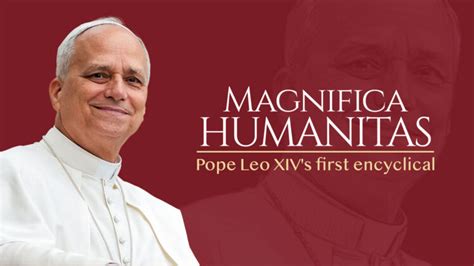
Pope Leo has released his first encyclical – about artificial intelligence – and let us hope that it might have some real influence in the real world. It is something that used to be common practice among governments and “think tanks” and universities, as well as churches and many other institutions both formal and informal, namely a “technology assessment”.
As a professor in technology, environment and society in Denmark, I was actively involved in many a technology assessment – it was much more common practice there than in Sweden – and part of my job was to teach engineering students about TA and help them carry out their own assessments by learning to take into account the broader contexts of their technical projects (you can read about it in my books, Hubris and Hybrids and The Making of Green Engineers). Believe it or not, there was even once an Office of Technology Assessment within the hallowed halls of the United States Congress that produced reports on information technology and biotechnology and many other so-called emerging technologies until it was shut down in the early 2000s, as were similar offices elsewhere. As technological development morphed into “Bigtech” its promoters stopped wanting to be assessed and saw to it that they weren’t.
The idea behind TA was to investigate the pros and cons of new technological developments in a comprehensive manner, with the participation of a wide range of “experts”, even the likes of me, whose expertise was mainly in criticizing and questioning the ways technology was being developed. Such technology assessments were routinely carried out in several countries and in the European Union itself as part of the official policy-making process, and they often included government-funded programs to facilitate a variety of forms of what was termed “public engagement”. Rather than jailing critics it was once common practice for policy-makers to listen to what they had to say. Oh those were the days!
Anyway, it’s good to see that technology assessment still exists, at least at the Vatican. One of the few bright spots in the world these days is the willingness of the new pope to take on the challenges that humanity faces and actually provide some leadership and moral guidance even, or perhaps especially, for us non-believers. Now let us see if all the Catholics out there will actually follow their leader’s lead and take some meaningful steps to control, regulate and further assess artificial intelligence, the new tower of Babel that the pope refers to in the encyclical.
Here’s a piece by Jill Lepore that provides a good introduction to the encyclical:
And here is the encyclical itself:
https://www.vatican.va/content/leo-xiv/en/encyclicals/documents/20260515-magnifica-humanitas.htm
And here’s Pete’s old song that encapsulates its message:

